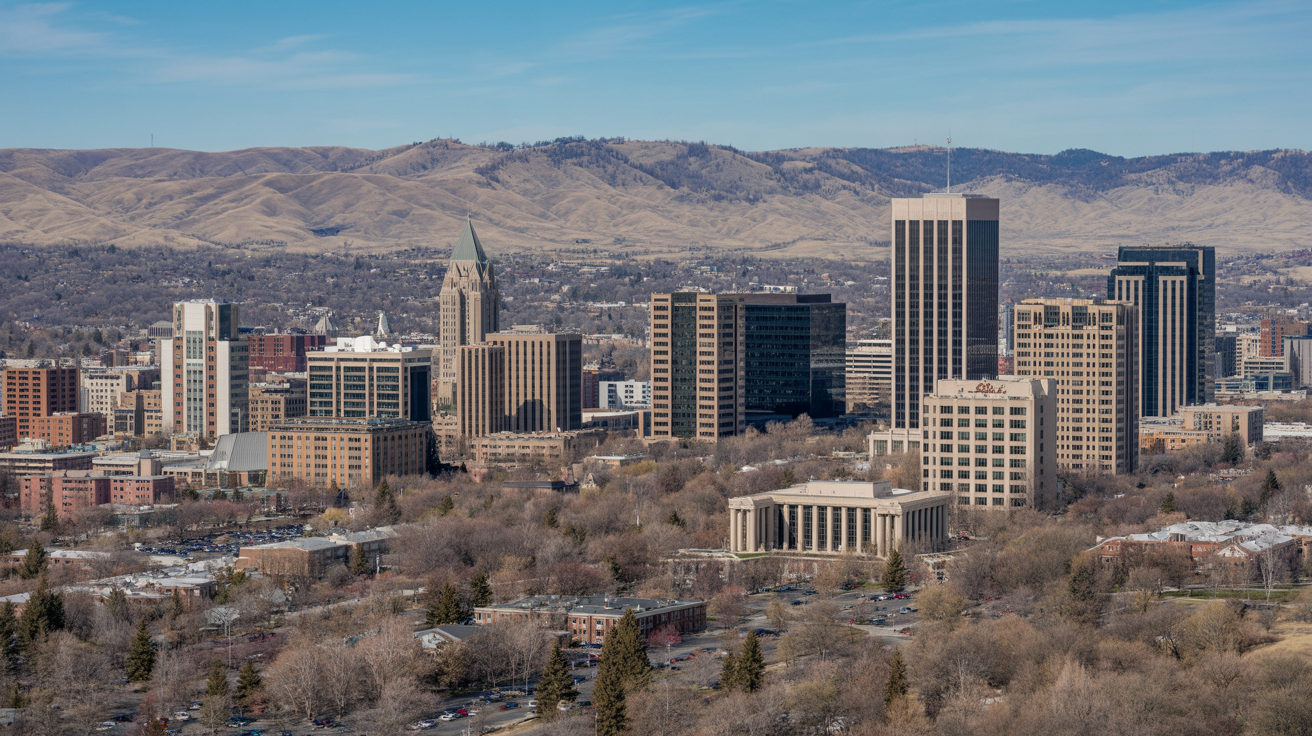
Boise: Urban Idaho at Its Best
Boise proper is the antithesis of the sprawling suburban development around Meridian and the growth areas. The North End’s Craftsman homes and mature canopy, Hyde Park’s walkable village feel, and the East End’s established character create neighborhoods that feel rooted rather than manufactured, while downtown’s evolution has added high-rise condos and urban townhomes that attract a different demographic than the family suburbs. Financing here rewards nuance: historic homes may need renovation considerations, condos involve HOA review and warrantability, and investment properties need DSCR evaluation. Working with a lender who understands these variations prevents the surprises that derail transactions in Boise’s competitive neighborhoods.
Conventional Loans for Boise’s Neighborhoods
Boise’s diverse neighborhoods — from historic North End Craftsmans to downtown condos to Bench starter homes — all work with conventional financing for qualified buyers. Conventional PMI costs less than FHA and drops off at 20% equity, strong credit earns premium pricing, and PMI removal accelerates your path to full ownership. A few Boise-specific notes: North End’s premium values often push into high-balance conventional or jumbo territory (and some historic homes need minor updates to meet appraisal standards, though most qualify without issue). Downtown condos work too — warrantable condos in established buildings qualify for standard conventional financing; non-warrantable condos require portfolio products with different terms, and I know those lenders. Down payment runs as little as 3% for first-time buyers, 5% for others, though given Boise’s price points many buyers target 10–20% to optimize the payment.
DSCR Investor Loans — Capturing Boise’s Rental Demand
Boise’s continuous transplant influx creates rental demand that shows no sign of slowing, and that’s where DSCR financing shines. DSCR (Debt Service Coverage Ratio) loans qualify you based on the property’s rental income rather than your personal income — if the rent covers the mortgage payment with room to spare (typically 1.0–1.25x DSCR), the property qualifies regardless of your W-2 or self-employment situation. That removes the income-documentation barrier that constrains traditional qualification and lets you scale beyond conventional’s 10-property cap. Down payment is typically 20–25% (a $400,000 Boise rental would need $80,000–$100,000 down), and Boise’s transplant-driven market typically supports the required DSCR ratios: the Bench (~1.15–1.30), downtown condos (~1.05–1.20), and family-oriented areas (~1.10–1.25). Both long-term and furnished medium-term rentals work with DSCR documentation, and projected short-term-rental income can be used (some lenders discount Airbnb projections versus long-term leases).
FHA, VA & Jumbo in Boise
FHA (3.5% down, flexible credit) serves first-time buyers in Boise’s more accessible neighborhoods and pairs with Idaho Housing down-payment assistance. VA offers eligible veterans zero down and no PMI. And for the North End’s premium properties and larger homes above the $832,750 conforming limit, jumbo financing covers the gap. I match the program to your neighborhood and goals.