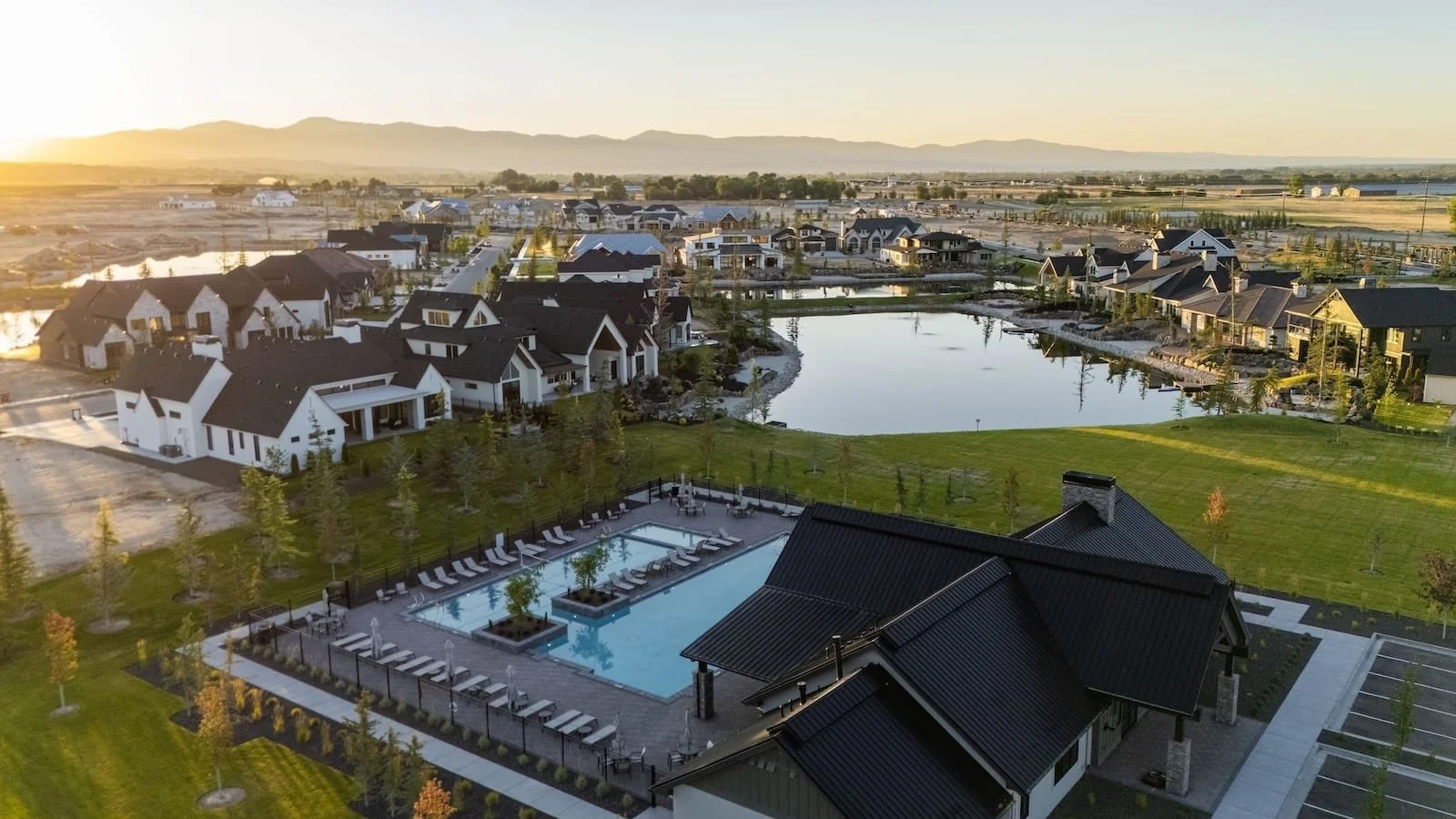
The Eagle Premium: Where Idaho Meets Luxury
Eagle’s transformation into Idaho’s most expensive market wasn’t an accident — strategic planning that preserved open space and limited density, combined with exceptional schools and Boise River recreation access, laid the foundation. Then California and Washington buyers arrived, many with remote-work flexibility and equity from coastal home sales, bringing the capital that pushed prices into jumbo territory. The buyer profile skews toward executives, entrepreneurs, and professionals with substantial wealth; many run businesses or work remotely for coastal companies, and many carry RSU income and stock compensation that requires lender expertise to document correctly. Traditional income verification doesn’t always capture Eagle buyers accurately, and asset-based lending may serve buyers whose wealth doesn’t translate neatly to W-2 income. This market demands a mortgage partner who understands luxury financing.
Jumbo Loans — the Standard Path in Eagle
With a median near $750,000 and premium properties past $1.5 million, jumbo loans aren’t a specialty product in Eagle — they’re the standard path. In Ada County, conforming maxes out at $832,750 for 2026, so purchases above that (common in Eagle Hills and premium neighborhoods) require jumbo. Eagle’s buyer profile aligns well with jumbo requirements: transplants arrive with substantial equity, strong credit, and sophisticated financial profiles, and tech executives understand the documentation and maintain the reserves lenders expect. Typical requirements: 10–20% down (some programs allow 10% with compensating factors), 6–12 months of reserves (retirement and investment accounts count), and DTI usually capped around 43% with exceptions for strong borrowers. Crucially, I count RSUs, stock options, and vested equity — requiring a 2-year history and calculating sustainable income from vesting schedules — so your real compensation qualifies you. And the jumbo-conventional rate spread has narrowed: current jumbo rates are often within 0.25% of conventional for well-qualified borrowers.
High-Balance Conventional — the Strategic Play
Eagle’s luxury reputation suggests jumbo-only, but conventional financing remains viable — and often smarter — for strategic buyers. High-balance conforming loans extend to $832,750 in Ada County, covering Eagle’s entry points and letting buyers with larger down payments access conventional’s favorable terms. For downtown Eagle condos, smaller homes, or buyers bringing substantial equity from a previous sale, conventional offers lower rates and PMI flexibility that jumbo can’t match, and sometimes a larger down payment to stay under the conforming limit meaningfully lowers your rate and total cost. Conventional PMI drops off at 20% equity (and Eagle’s appreciation often reaches that threshold within a few years), down payment runs 3–5% minimum (though most Eagle buyers bring 20%+), and credit of 620 minimum (740+ for best pricing) covers most Eagle buyers. I run the jumbo-vs-high-balance-conventional comparison so you get the lowest total cost.
FHA & VA in Eagle
While less common at Eagle’s price points, FHA (3.5% down) can work for the lower-priced neighborhoods and condos within the $586,500 Ada County FHA limit, and VA offers eligible veterans zero down with no loan limit on full entitlement — genuinely valuable in a luxury market. I’ll tell you honestly which program fits.